
Recovery Isn’t a Solo Sport — Even Though It Feels That Way Right Now
After an accident, a serious diagnosis mishandled by a provider, or any event that upends your sense of safety, the instinct is often to handle it alone. You research at midnight. You reread the same insurance letter five times. You wonder if what happened to you is even “bad enough” to ask for help.
Here’s what the research and the lived experience of thousands of victims across Missouri and Kansas both point to: people who connect with the right support recover faster: financially, medically, and emotionally. Not because support does the work for you, but because it removes the guesswork that eats up time and energy you don’t have to spare right now.
This isn’t about finding someone to fight your battles. It’s about finding someone who can help you see the battlefield clearly.
The Research-Backed Case for Support
You don’t need a clinical degree to understand this pattern. Still, it is well documented: victims of accidents, crime, and medical harm who have access to social support and advocacy resources tend to navigate the practical aftermath- claims, paperwork, medical follow-up, financial decisions, more efficiently than those who go it alone.
Some of why this happens is emotional: having someone who understands the process reduces the anxiety that causes people to freeze, delay, or avoid necessary steps altogether. Some of it is purely practical: a person who already knows which forms matter, which deadlines are real, and which phone calls to make first can save weeks of trial and error.
The result isn’t just a faster recovery on paper. It’s a recovery that feels less chaotic in the moment, which matters just as much.

The 3 Gaps Victims Fall Into
Almost every victim we talk to in Missouri and Kansas falls into one or more of these gaps in the early days and weeks after an accident or medical harm:
1. Not knowing where to start. There’s no single intake form for “my life just got upended.” Do you call your insurance company first? A doctor? A lawyer? The order matters more than people realize, and getting it wrong can cost time or money.

2. Not knowing who to trust. Insurance adjusters work for the insurance company. Some “recovery help” is really a sales funnel. Well-meaning friends give advice based on their own unrelated experience. It’s genuinely hard to tell who’s actually looking out for you.
3. Not knowing what’s urgent vs. what can wait. Some deadlines are real and unforgiving: a statute of limitations, a claim filing window, a medical follow-up that affects your case. Others feel urgent but aren’t. Without guidance, everything feels equally high-stakes, which is exhausting and unsustainable.
How an Advocate Is Different From a Lawyer, a Friend, or the Internet
It’s worth being direct about what Victim Resource is, and isn’t.
We’re not your lawyer. We don’t represent you in a legal proceeding, and we’re not a substitute for one if you need legal representation.
We’re not just a sympathetic ear, though we understand why that matters too.
We’re not a search engine returning generic articles that may or may not apply to your specific situation.

We’re the translator. Our role is to help you understand what’s actually happening. What your options are, what terms mean, what steps make sense in what order, so that when you do talk to a lawyer, a doctor, or an insurance company, you’re walking in with clarity instead of confusion. Think of it less as “someone fighting for you” and more as “someone helping you see clearly enough to know how to fight for yourself, and who else you might need in your corner.”
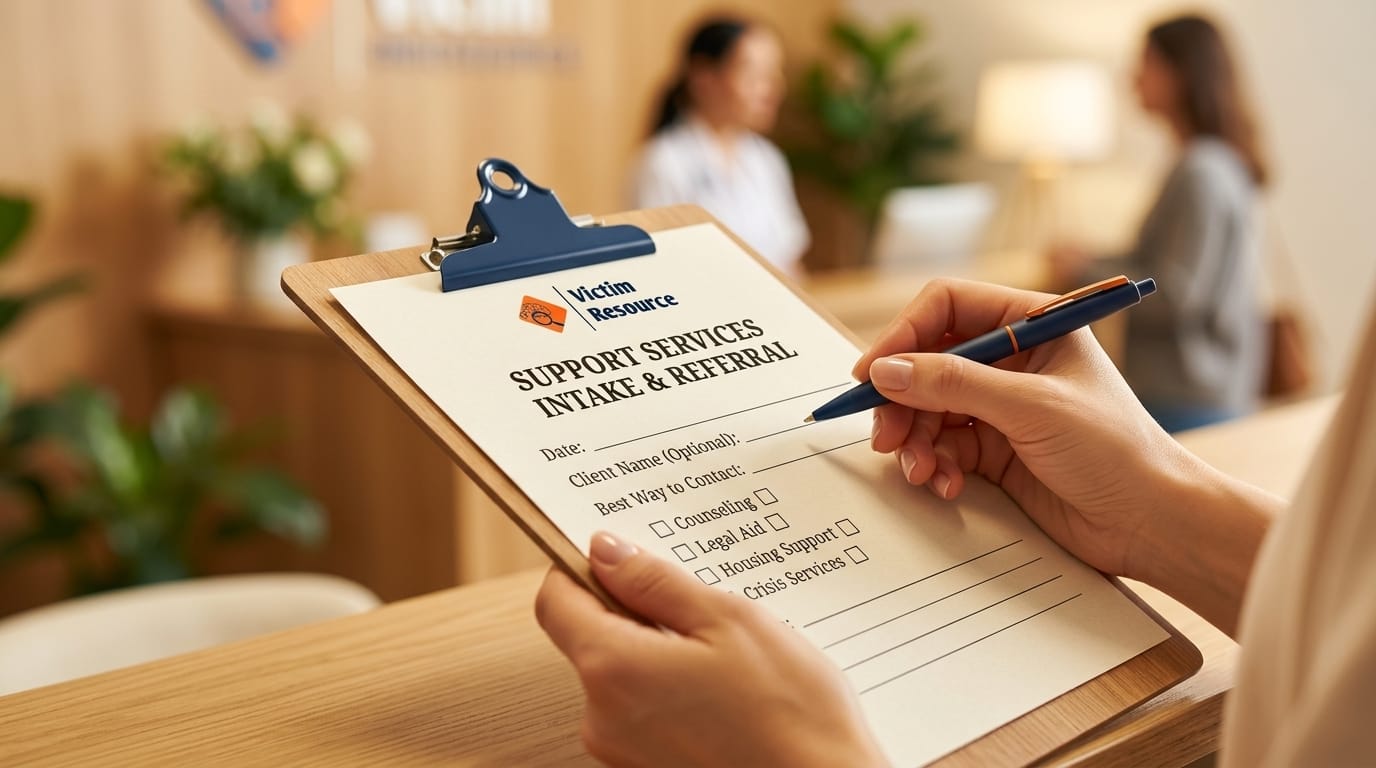
What a First Conversation With Victim Resource Actually Looks Like
We keep this simple on purpose, because the last thing you need right now is another complicated process.
Step 1: Tell us what happened. In your own words, no legal jargon required. We’re not evaluating whether your situation is “worthy” of help. We’re listening to understand it.
Step 2: We sort through it with you. We help identify what’s actually urgent, what resources apply to your specific situation (financial, medical, legal, emotional), and what the realistic next steps look like, without overwhelming you with everything at once.
Step 3: Move forward with a clearer head. You leave the conversation with an actual sense of direction: not a stack of homework, not a sales pitch, just clarity about what to do next and where to go for it.
What People Usually Say Afterwards
The most common reaction we hear after a first conversation isn’t relief that a problem is solved. It’s something more specific: surprise at how much they didn’t know, and relief that they know it now.